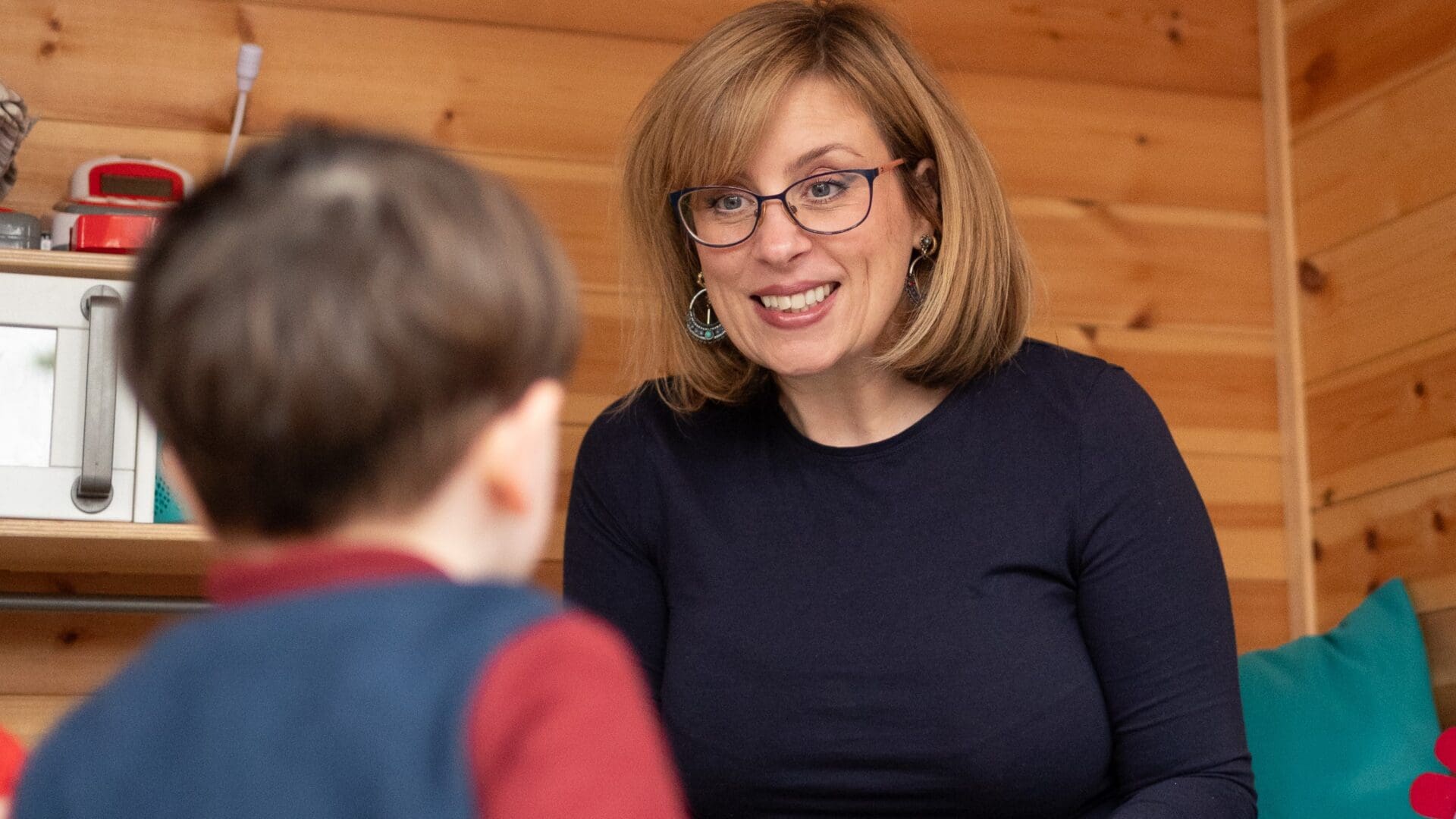
After several years of being single, Liv knew she wanted to grow her own family. She initially explored fertility options, including IUI and IVF, but also began researching adoption to understand which path felt right for her.
Adoption was always something Hannah was familiar with, as both her father and her aunts were adopted. While she considered other routes to parenthood, she quickly realised that adoption was the best path for her.
To find out more, she attended an adoption information session. She already knew about the Foster for Adoption (FFA) route from a friend who had gone through the process.
Hannah wanted to adopt a younger child or baby, and after speaking to a few different agencies, she was advised that working with a local authority agency like AiM was the best option for her goal.
When Liv first contacted AiM to discuss adoption, she was advised to explore all other routes before making a final decision, as adopters need to be fully committed to the process. After her fertility treatments were unsuccessful, Liv took some time to reflect and found herself drawn back to adoption, something she had always felt deeply connected to.
Liv began her adoption journey by attending an AiM webinar, followed by an initial phone call and a home visit from a social worker. With a professional background in health and social care, she found the training days built up her previous knowledge and understanding of the process.
Adoption was always something I wanted to do. My family and I were always open to the idea of welcoming a child who wasn’t biologically ours.The training helped me and my support network understand more about trauma-experienced children and how best to support them,” Liv explains. “The process didn’t faze me — I knew why my life needed to be explored and discussed. My advice to anyone thinking about adopting is: don’t let the process put you off. It was very smooth for me.
She also valued the sense of community she found during training. “Meeting other prospective adopters was amazing — we still keep in touch through WhatsApp. Everyone progresses at different speeds, so my advice is: don’t compare your journey to others. Delays can happen, but it’s worth the wait.”
As a single adopter, Liv had fewer documents and checks to complete, which made her process a little quicker. Stage two went smoothly, and before long, she received the profile of a baby boy under 12 months old. The profile included a photo, background details, and medical information.
Everything began to fall into place quickly. “All the dates aligned, and it felt perfect, like it was meant to be,” she recalls.
Something just clicked when I saw his profile. When the match was approved at panel, that’s when it really sank in, I was going to be a mum.
Meeting the foster carers was a special part of the process for Liv. “It was great to learn about his routine and get to know the foster family. They play such an important role in a child’s early life, so continuing those relationships mattered to me.”
Liv’s parents were her main support network and were closely involved throughout. The transition period was intense but rewarding. “We spent long days together, mornings and evenings and learning his routine. Before long, I was changing nappies, helping with dinner, and joining his bedtime routine so he could start to feel secure with me.”
Over 11 days, their bond grew stronger. “We started with short visits, then days out, and finally full days at my home. On placement day, he lifted his arms to me; that moment, I knew he felt safe.”
The transition went smoother than Liv could have hoped for. “I was nervous, of course, but he settled in beautifully. I prepared myself for the worst, but it couldn’t have gone better.”
Liv also had the opportunity to meet her son’s birth parents, something she describes as incredibly meaningful. “It was an emotional experience, but I think it brought them comfort to know who would be caring for and loving their child.”
She chose to send the first update to the birth parents via a PowerPoint presentation with photos and short audio clips. “It’s more personal and helps them feel connected without sharing private details,” Liv says. Indirect contact is carefully managed to protect everyone’s privacy while still celebrating the adopted child’s story. As the child grows older, they can take part in creating the updates or letters, helping them stay connected to their story in a positive and meaningful way.
Today, Liv says becoming a mum has been the best experience of her life. “We go on adventures together, and my parents absolutely love being grandparents. It’s everything I hoped for and more.”